
Live Foundational Herbalism Program
Our Live Foundational Herbalism Program will open up the world of herbalism to any beginner.


Live Foundational Program Welcome and Logistics Document
Live Foundational Program Syllabus
Live Class Dates and Program Links (Live Classes, Herb Kit Ordering, etc.)
Course Hours Tracking Log
Live Program Orientation Video
Introduction to Reflective Journaling Audio
Guide to Reflective Journaling
Google Drive Tutorials
Audio: A Legal and Ethical Look at Mainstream Scope of Practice
A Legal and Ethical Look at Mainstream Scope of Practice Transcript
Assignment: Researching the Legalities of Herbal Practice in Your State or Country
Audio: Defining Scope of Practice for Herbalists
Defining Scope of Practice for Herbalists Transcript
Assignment: Finding Your Edges
Scope of Practice: Red Flags and Referrals Part 1 Video
Assignment: Red Flags Quiz Part 1
Scope of Practice: Red Flags and Referrals Part 2 Video
Red Flags Quiz Part 2 Quiz
Live Class Recording: Scope of Practice
Live Tea Tastings-START HERE
Tea Tasting #1: Yarrow Board
Tea Tasting #1: Yarrow Write Up
Tea Tasting #2 Holy Basil Board
Tea Tasting #2: Holy Basil Write Up
Tea Tasting #3: Ginger Board
Tea Tasting #3: Ginger Write Up
Tea Tasting Board #4 Motherwort
Tea Tasting #4 Motherwort Write up
Tea Tasting #5 Linden Board
Tea Tasting #5 Linden Write Up
Tea Tasting #6 Hibiscus Board
Tea Tasting #6 Hibiscus Write Up
START HERE
Materia Medica Part 1
Audio: Materia Medica Part 1
Materia Medica Part 2
Audio: Materia Medica Part 2
Materia Medica Part 3
Audio: Materia Medica Part 3
Materia Medica Part 4
Audio: Materia Medica Part 4, first segment
Audio: Materia Medica Part 4, second segment
Materia Medica Glossary
Audio: Materia Medica Glossary
Exploration of the Qualities, Actions and Effects Assignment
Live Class Recording: Foundational Materia Medica
A Guide to Monograph Writing: Foundational Program
Example Monograph
Hawthorn Tea Tasting Example
Goldenrod Tea Tasting Example
Foundational Herbcraft by jim mcdonald
Monograph Q&A and Info Session with Mel
Monograph Assignment #1: Yarrow, Achillea millefolium
Monograph Assignment #2: Echinacea, Echinacea angustifolia
Monograph Assignment #3: Marshmallow, Althaea officinalis. Althaea spp.
Monograph Assignment #4: Juniper, Juniperus spp.
Monograph Assignment #5: Lobelia, Lobelia spp.
Monograph Assignment #6: Barberry, Berberis vulgaris
Monograph Assignment #7: Oak, Quercus alba, Q. spp.
Monograph Assignment #8: Dandelion, Taraxacum officinale
Monograph Assignment #9: Plantain, Plantago major, P. lanceolata
Monograph Assignment #10: Chamomile, Matricaria chamomilla
START HERE
Welcome To The Five Realms
The Five Realms Part 1 Class Powerpoint
Part 1: Intro and Origins of the Five Realms
Part 1: Intro and Origins of the Five Realms
Part 2: The Realm of Health
Part 2: The Realm of Health
The Realm of Health: Key Concepts
Realm of Health Journal Prompts (Due November 17th)
Part 3: The Realm of Maladaptations
Part 3: The Realm of Maladaptations
The Realm of Maladaptations: Key Concepts
Realm of Maladaptation Journal Prompt (Due November 17th)
Part 4: The Realm of Disease
Part 4: The Realm of Disease
The Realm of Disease: Key Concepts
Realm of Disease Journal Prompt (Due November 17th
Live Class Recording: The 5 Realms Part 1
Part 5: The Realm of Experience
Part 5: The Realm of Experience
The Realm of Experience: Key Concepts
Realm of Experience Journal Prompts (Due December 2nd)
Part 6: The Realm of Eco-Sociocultural Political Context
Part 6: The Realm of Eco-Sociocultural Political Context
Realm of Eco-Sociocultural Political Context Journal Prompt (Due December 2nd)
Part 7: Herbal Medicine and The Dance Of The Realms
Part 7: Herbal Medicine and The Dance Of The Realms
Dance of the Realms Journal Prompt
Part 8: Conclusion
Part 8: Conclusion
Live Class Handouts Realms of Experience and Context
Building Health Part 1-START HERE
Welcome to Building Health + Learning Physiology Resources
Audio: Building Health: An Exploration of Diet and Nutrition
Building Health: An Exploration of Diet and Nutrition
SUMMARY: Nutrition Module Key Takeaways
SUMMARY: 20 Page Nutrition Overview
Audio: Chapter 1: How We Know What We Know in Nutritional Science: Evidence, Gaps, Controversies and The Need for Epistemic Humility
Chapter 1: How We Know What We Know in Nutritional Science: Evidence, Gaps, Controversies and The Need for Epistemic Humility
Quiz: How We Know What We Know
Audio: Chapter 2: Body Systems Review: A Nutritional Perspective
Chapter 2: Body Systems Review: A Nutritional Perspective
Quiz: Review of Body Systems
Audio: Chapter 3: Introduction to Energy Production
Chapter 3: Introduction to Energy Production
Quiz: Energy Production
Audio: Chapter 4: Carbohydrates and Vitamins for Energy Production
Chapter 4: Carbohydrates and Vitamins for Energy Production
Quiz: Carbs and Vitamins for Energy Production
Audio: Chapter 5: Proteins and Blood-Building Nutrients
Chapter 5: Proteins and Blood-Building Nutrients
Quiz: Proteins and Blood Building Nutrients
Audio: Chapter 6: Fats and Fat-Soluble Vitamins
Chapter 6: Fats and Fat-Soluble Vitamins
Quiz: Fats and Fat-Soluble Vitamins
Audio: Chapter 7: Bone-Building Nutrients
Chapter 7: Bone-Building Nutrients
Quiz: Bone-Building Nutrients
Audio: Chapter 8: Water and Electrolytes
Chapter 8: Water and Electrolytes
Quiz: Water and Electrolytes
Audio: Chapter 9: Trace Minerals and Their Functions
Chapter 9: Trace Minerals and Their Functions
Quiz: Trace Minerals and Their Functions
Audio: Chapter 10: Antioxidants and Phytonutrients
Chapter 10: Antioxidants and Phytonutrients
Quiz: Antioxidants and Phytonutrients
Audio: Chapter 11: Nutrient Interactions and Common Dietary Restrictions
Chapter 11: Nutrient Interactions and Common Dietary Restrictions
Quiz: Nutrient Interactions and Common Dietary Restrictions
Nutrient Density Awareness Assignment
Guide: Adding foods to your Cronometer diary
Guide: Create a custom recipe in Cronometer
Guide: How to access nutritional information on Cronometer
Building Health Part 2-START HERE
Audio: Movement Intro and Chapter 1: Movement as Nutrition
Movement Intro and Chapter 1: Movement as Nutrition
Quiz: Movement As Nutrition
Audio: Movement Chapter 2: Movement is More Than Exercise
Movement Chapter 2: Movement is More Than Exercise
Quiz: Movement is More Than Exercise: Embracing a Holistic Approach to Physical Activity
Audio: Movement Chapter 3: Movement as a Birthright
Movement Chapter 3: Movement as a Birthright
Quiz: Movement as a Birthright: Embracing Diversity and Inclusion in Human Movement
Audio: Movement Chapter 4: Recovery-Driven Movement
Movement Chapter 4: Recovery-Driven Movement
Quiz: Recovery-Driven Movement: Optimizing Health and Performance Through Balanced Adaptation
Audio: Movement Chapter 5: Embodied Movement
Movement Chapter 5: Embodied Movement
Quiz: Embodied Movement: Cultivating Presence, Awareness, and Integration in Physical Practice
Audio: Movement Chapter 6: Movement is Fascial
Movement Chapter 6: Movement is Fascial
Quiz: Movement is Fascial: The Living Web of Human Movement
Audio: Movement Chapter 7: Movement is Neural and Movement Conclusion
Movement Chapter 7: Movement is Neural and Movement Conclusion
Quiz: Movement is Neural: The Dance of Mind and Body
Live Class Recording: Building Health, Part 2 - Movement
Audio: Building Health: Rest and Restoration Part 1
Audio: Building Health: Rest and Restoration Part 2
Rest and Restoration Handout
7-Day Rest and Restoration Practice Assignment
Quiz: Rest and Restoration
Building Health Part 3-START HERE
Live Class Recording: Building Health, Part 3 - Coherence
Audio: Building Health: Connection
Building Health: Connection
Audio: Interpersonal Connections
Interpersonal Connections
Audio: Fostering Healthy Connections
Fostering Healthy Connections
Audio: Sense of Coherence: A Framework for Understanding Intangible Health Factors
Sense of Coherence: A Framework for Understanding Intangible Health Factors
Building Health: A 4 Week Personal Development Assignment
Medicine Making Logistics-START HERE
Medicine Making Resource Documents
Medicine Making Supplies and Equipment List
Solvents
Weight to Volume Ratios
Infusions and Decoctions
Topicals - Poultices, Compresses and Fomentations
Macerations, and Making Stronger Extracts with Time, Heat and Agitation
Glycerites - The Sealed Simmer Method
Pressing and Straining Macerations
Solubility Using Different Preparation Methods
Medicinal Oils
Salves and Balms
The Application of Topical Herbs
How to Make Herbal Syrups
How to Make Herbal Vinegars
Making and Using Herbal Wines
Herbal Acute Care Part 1-START HERE
Introduction to Acute Care
Live Class Recording: Pain, Tension, and Structural Distress with special guest Forrest Chalmers
Live Class Recording: Materia Medica and Formulation for Pain and Distress
Materia Medica - Beyond the Qualities
The Stress Response
Pain Part 1: Nociception
Pain Part 2: The Interpretation of Nociception
Live Class Recording: Acute Disease Processes and Care Part 1
Pain and Distress
Tension, Pain and Distress
Materia Medica for Pain, Distress and Inflammation
Pain and Distress Assignment
Live Class Recording: Closed Wounds and Soft Tissue Trauma
Closed Wounds Part 1: The Pathophysiology of Soft Tissue Injury
Live Class Recording: Open Wounds
Live Class Recording: Bites, Stings and Allergies
Bites, Stings and Allergies Class Notes
Bites, Stings and Allergic Reactions Materia Medica and Formulary for Allergies
Herbal Acute Care Part 4-START HERE
Acute Gastrointestinal Conditions Class Notes
The Digestive System A&P Class Notes
Acute Digestive Conditions Cheat Sheet
Digestion Materia Medica
Live Class Recording: Digestive System
Digestive Assessment Mini Cases
Acute GI Class Powerpoint
Building Digestive Vitality PowerPoint
Building Digestive Vitality Live Class
Live Class Recording: Introduction to Immunity and Infection
Acute Immunity and Fevers Class Notes
Immunity and Fevers Mini Cases
Live Class Recording: Acute Immunity, Infections and Fevers
Acute Respiratory Care
Live Class Recording: Acute Respiratory Conditions
Live Class Recording: Urinary Tract Infections
The Physiology of the Urinary Tract
Urinary Tract Infection Materia Medica and Therapeutics
Live Class Recording: PMS and Primary Dysmenorrhea with Mel
The Physiology of the Menstrual Cycle Class Notes
PMS and Primary Dysmenorrhea Materia Medica and Therapeutics Class Notes
Acute Urinary System Care Powerpoint
PMS and Primary Dysmenorrhea Acute Care Powerpoint
Live Class Recording: Genitourinary Acute Care
Capstone Project Instructions and Rubric
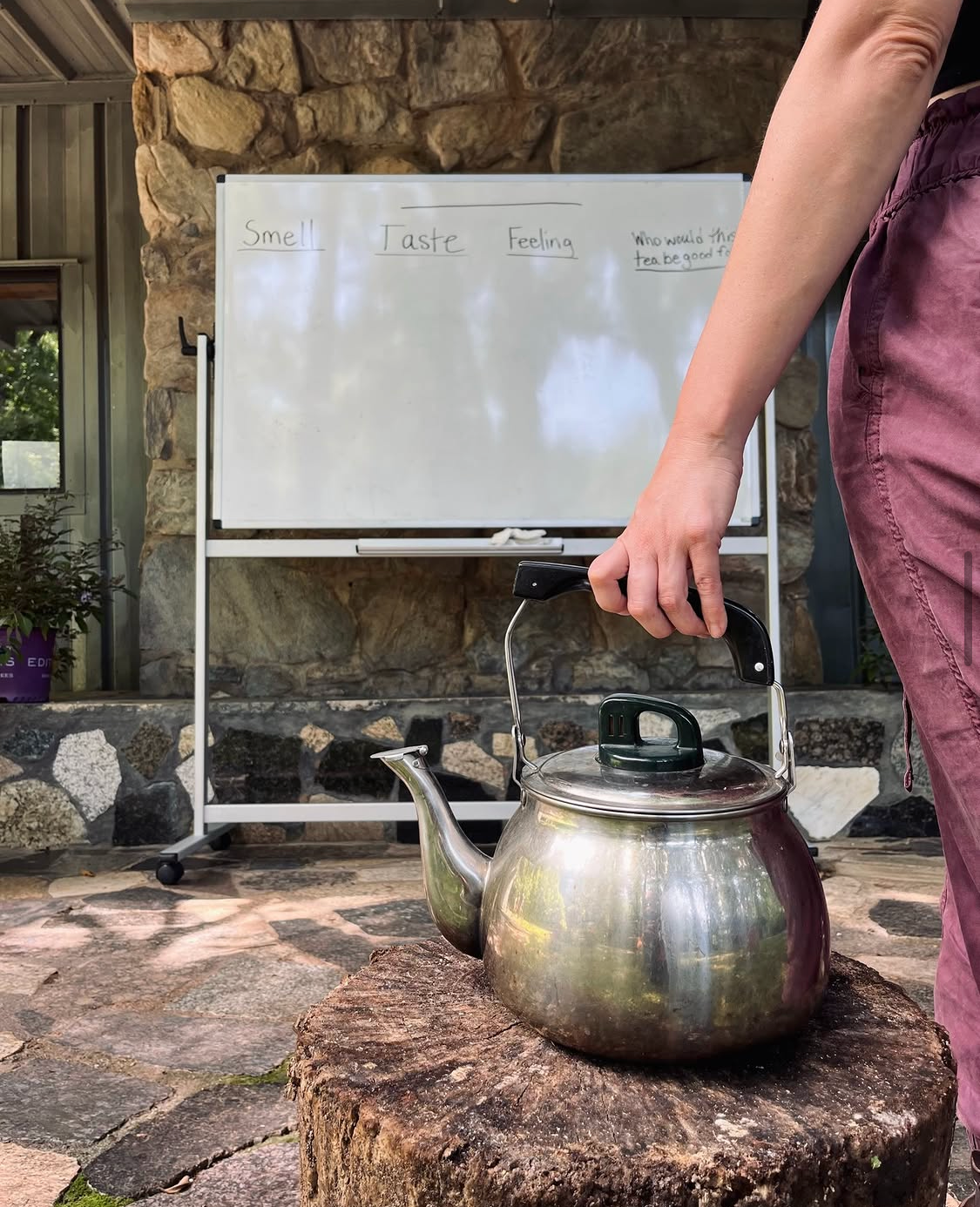
The program includes 34 live core curriculum classes, as well as 8 live tea tastings and the option of weekly study hall sessions and live monthly Q&As. Recordings will be available for all classes 48 hours after each class.
Live Core Curriculum Classes
These sessions are where the course material is taught and attendance is required. We understand that things come up and are happy to accommodate occasional absences if communicated in advance.
Classes will be held on Mondays from 5:30-7:30 Central Standard time from September 21st, 2026 through May 24th, 2027. We will have one week off each for Winter Break and Martin Luther King, Jr. Day.
Tea Tastings
These are sensory-based group experiences designed to help you build a deeper relationship with individual herbs. Together we will taste one tea each session and discuss it’s smell, taste, and how it feels in the body. We will be tasting blind. Students are required to attend 5 of the 8 sessions, either in person or online. Herb packets will be available for purchase for all online students.
Tea tastings will be held from 6:30-7:30 pm Central Standard Time on the following Wednesday evenings
Dates: October 21st, November 18th, December 16th, January 20th, February 17th, March 17th, April 21st, May 19th.
Q&A Sessions with Mel and Thomas
Optional, online only. Held on every third Wednesday from 4-5 Central Standard Time. A space to ask questions, clarify course material, and get instructor feedback.
Weekly Study Halls
Optional, online only. Held every Thursday from 5–6 pm Central Standard Time, these sessions offer a quiet, supportive space to work on class assignments and ask curriculum-related questions.
This is an 8-month, live program
No, anyone is welcome to enroll!
No, but if you're interested in training that will prepare you for active clinical practice, check out our full clinical program! This program is the first piece of our Clinical Practitioner program.
$2297.00 if paid in full, or 12 payments of $200. This is our first live cohort with the updated curriculum.
- Complete all coursework
- Pass all quizzes
- Turn in and revise as needed all assignments
- Complete 10 monograph papers
- Complete your capstone project
Send an email to [email protected].
Addressing Cost and Accessibility in Herbal Education:
In the spirit of accessibility, we offer a limited number of need-based equity and community service partial scholarships for this program. We are also committed to finding new ways to offer more scholarships in the future. Please email Mel at: [email protected] for more information or to apply.